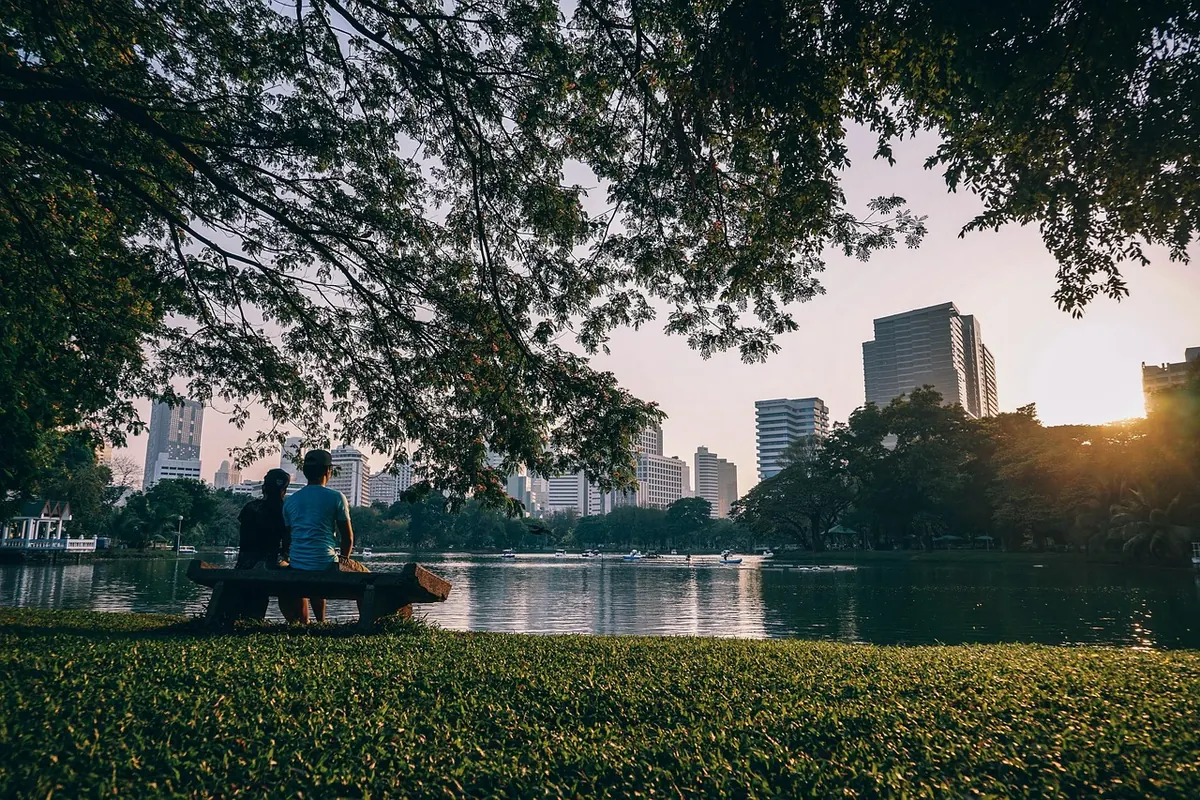
There is a park near you that you have already decided is boring. Three benches, a bin, a path that loops past a war memorial, a hedge that smells faintly of cat. You walk through it on the way to somewhere else and you have never once thought: here is my subject.
Look again. The parks that feed creative work are rarely the dramatic ones. They are the ones you see often enough to notice change in — the lime tree that leafs out a fortnight after the one across the path, the puddle that survives every dry spell, the man with the greyhound who arrives at ten past seven. This is not about finding a better park. It is about learning to see the one you already have, and building a small, repeatable routine around it.
Choose one park and go back
Novelty is overrated. A place becomes interesting when you know its habits, and you can't know its habits from a single visit. So pick a park you can reach on foot in fifteen minutes, and go at roughly the same time of day for a month. Same gate, same bench, same direction around the loop.
Repetition does the work for you. On the second visit you notice what you missed; on the fourth you notice what has changed. The council has cut the grass. The ice on the pond has gone soft at one edge. Someone has built a small cairn of pebbles on the bench arm and it is still there, so someone else is coming back too. None of this felt available on day one, because on day one you were still scanning for something impressive.
Keep the geography tight. One bench, one tree, one stretch of path. Constraints make attention possible.
Practise micro-observation
Before you can write, draw or photograph anything worth keeping, you need raw material, and raw material comes from looking harder at less. Choose one square metre of ground and give it ten minutes. Or one object: a bench leg, a railing, the base of a tree where the roots meet the soil.
Then count. Lichen, moss, three kinds of grass, ants moving along a crack, a spider's web strung between the bench and the bin, a bottle cap, dog hair, a single feather from something you can't identify. You will find more in that square metre than you expected, and the counting keeps you there past the point where you would normally have stood up.
Ask questions you can't answer. Why is the moss only on the north side of the trunk? Who feeds the ducks, and at what time? Why has the path worn wide at this corner and not at the other? Write the questions down even when they sound obvious; they are the beginning of noticing, not the end of it.
Sound is worth a session of its own. Sit somewhere dry, close your eyes for two minutes, and list what you hear and roughly where it comes from. Traffic on the far road, a gate, a wood pigeon, a child counting, the gravel under someone's shoes. Then try smell. Wet bark, cut grass, chips from the kiosk, the mineral smell of a drained fountain. These are the details that make a piece of work feel like a real place rather than a park in general.
Keep a notebook with rules
A notebook that is too precious will stay in your bag. Choose something pocket-sized and cheap enough that you don't mind it getting wet. Then give it a few rules so that each entry takes two minutes rather than twenty:
- Date, time, weather. Three lines, every time. Cold, bright, wind from the west after rain. This is the frame around everything else.
- One concrete detail. Not "peaceful" or "lovely". The wind moved the poplar leaves all at once, like a hand turning a page. The frost had drawn a map of every shortcut across the grass.
- One question you would like answered by the next visit.
- One page maximum. Stop while you still have something to say.
- No editing. Corrections and crossings-out are part of the record.
Favour the specific over the poetic. A note that says "two pigeons fighting over a crust, one with a damaged foot" will still be useful in six months. A note that says "nature is beautiful" will not.
Sketch what you can't photograph
Sketching is not a test of talent. It is the slowest and most reliable way to look at something properly, because you cannot draw what you haven't actually seen. Nobody needs to see the results. A page of crooked lines in a cheap book is doing its job perfectly.
Start with three short exercises, each about ten minutes:
- Contour. Pick one tree and draw its outline from the base to the crown in a single line, without lifting the pencil or looking at the page more than you must. You will produce something strange and you will also remember the exact shape of that trunk.
- Negative space. Draw the gaps around a bench rather than the bench: the wedge of grass under it, the sky between the arm and the back. Objects are easier to see when you stop naming them.
- Three tones. With one soft pencil, block in only shadow, mid-tone and light. This is how you learn what the overcast light is doing to a hedge, and why the park looks different at four in the afternoon.
Divide a page into four boxes and draw the same tree once a season. By the fourth box you will have a record that no photograph could give you, because it carries your attention in it. Sketch people too, in motion, knowing they will leave before you finish. Half-drawn figures are honest and often more alive than careful ones.
Let weather and season do some of the work
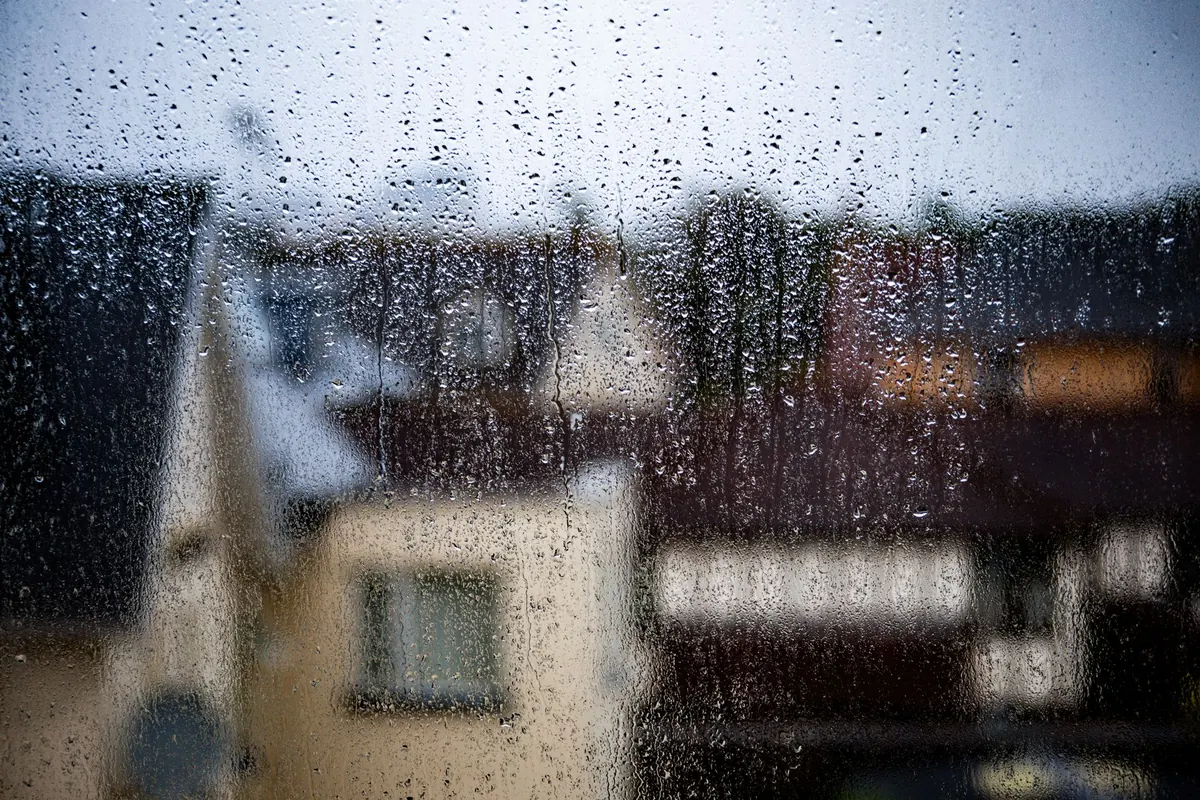
Most people visit parks only in good weather, which means they see about a third of what is there. Dressed properly, go out in the rain and watch what it reveals: the drainage channel you never noticed, the path that turns to mud and shows you where everyone actually walks. Frost does the same job, drawing the shortcuts in white.
Overcast days flatten the light and are excellent for detail — bark, lichen, the weave of a fence. Low sun turns railings into long shadows across the grass, which is a whole different subject. Wind gives you movement, and movement is the hardest thing to draw and the most interesting to describe. Winter is not a dead season in a park; it is the season when structure shows. Nests appear, branch shapes become legible, and you can finally see how the whole place fits together.
Your next visit: a short practical plan
Pick your park today and block out twenty minutes this week. Take a pencil, a small notebook and something to sit on that isn't damp. Walk the same short route, sit on the same bench, and do the following: one micro-observation of a square metre, three notebook lines, one ten-minute sketch, one open question. That's it. Aim for once a week for six weeks, and keep every page in order so you can read back through the sequence at the end.
A few courtesies make the practice easier to sustain. Stay on the paths when the ground is soft, don't pick plants or take cuttings, keep a respectful distance from nests and animals, and follow whatever rules the park itself posts. You are a guest in a place that is also somebody's work and something's habitat.
After a month you will have ten pages, a handful of half-finished drawings and a completely different relationship with a park you once walked through without looking. The place will not have changed. Your attention will have, and that is the part you can carry anywhere.
Photo: igorovsyannykov / Pixabay